Joseph Warren Portrait of a Patriot
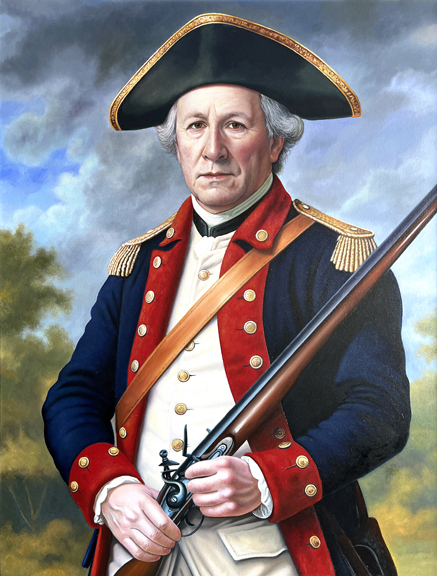
40″ x 30“, Oil on Canvas, 2026
by Charles C. Clear III
Only one life portrait of Joseph Warren is known to exist: John Singleton Copley’s 1765 painting, completed when Warren was just twenty-four years old. In that work, Copley presents him as a physician and gentleman—seated calmly, dressed in black professional attire, his arm resting upon anatomical drawings. His expression is thoughtful and composed, conveying intellect, refinement, and compassion rather than revolutionary fire. The portrait reflects Warren’s standing at the time: a successful doctor with the largest medical practice in Boston, a man of education, prosperity, and promise. As John Adams later recalled, he was “a pretty, tall, genteel, fair-faced young gentleman”—qualities clearly evident in Copley’s portrayal.
Yet in the decade that followed, Warren’s life was utterly transformed.
He delivered electrifying orations commemorating the Boston Massacre, helped organize resistance to British authority, and emerged as one of the most persuasive voices urging independence. His gifts as a writer, organizer, and speaker made him indispensable to the Patriot cause—and ultimately carried him from the lecture hall to the battlefield.
The Battle of Bunker Hill
In June of 1775, Warren was thirty-four years old—a widower with four small children, newly engaged to Mercy Scollay. He had a thriving medical practice, a family who depended upon him, and every reason to preserve his safety. He did not have to fight at Bunker Hill.
In The Life of Elbridge Gerry by James Trecothick Austin, Warren’s friend Elbridge Gerry pleads with him not to go: “It is not worthwhile for you to be present; it will be madness to expose yourself, where your destruction will be almost inevitable.” Warren’s reply reveals the depth of his conviction: “I know it; but I live within the sound of their cannon—how could I hear their roaring in so glorious a cause, and not be there!” When Gerry warned him again, concluding, “As surely as you go there, you will be slain,” Warren answered with the words of Horace: Dulce et decorum est pro patria mori — “It is sweet and fitting to die for one’s country.”
Though newly appointed a Major General, Warren had no formal military experience. When he arrived at Bunker Hill on June 17, 1775, he declined command and insisted on fighting as a private, requesting to be placed where the combat would be fiercest. Borrowing a musket, he took his place in the trenches on Breed’s Hill. He would not live to see the sun set.
Warren died a soldier.
I set out to paint the portrait Copley never had the chance to make: Warren the soldier. Working from Copley’s likeness and aging him by a decade, I imagined how he might have appeared on the threshold of Bunker Hill—a man marked by years of revolution, yet still composed, still humane. He stands in the Continental uniform he earned but never lived to wear, musket in hand, beneath a sky where gathering storm clouds press against the last light of blue. The landscape behind him remains calm; what lies ahead does not.
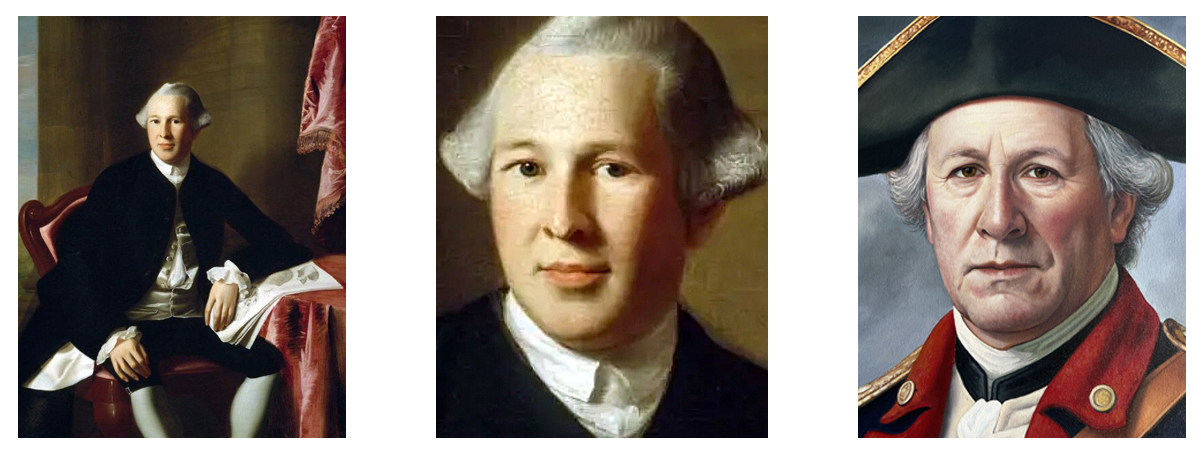
His expression carries the quality that first drew me to him: the look of a man who knows exactly what is coming and has made his peace with it. Not a warrior by nature, but a physician and intellectual who, at the decisive moment, placed principle above safety and service above rank.
This portrait is both an act of historical imagination and an act of remembrance—a tribute to a leader who gave everything at the very birth of a nation, and whom history has never fully repaid.
Charles C, Clear III
cc@oceanstateart.com